Dynamic Scheduling for Custodial Services
The plan inside a Living Facility: the day tells the night what to do.
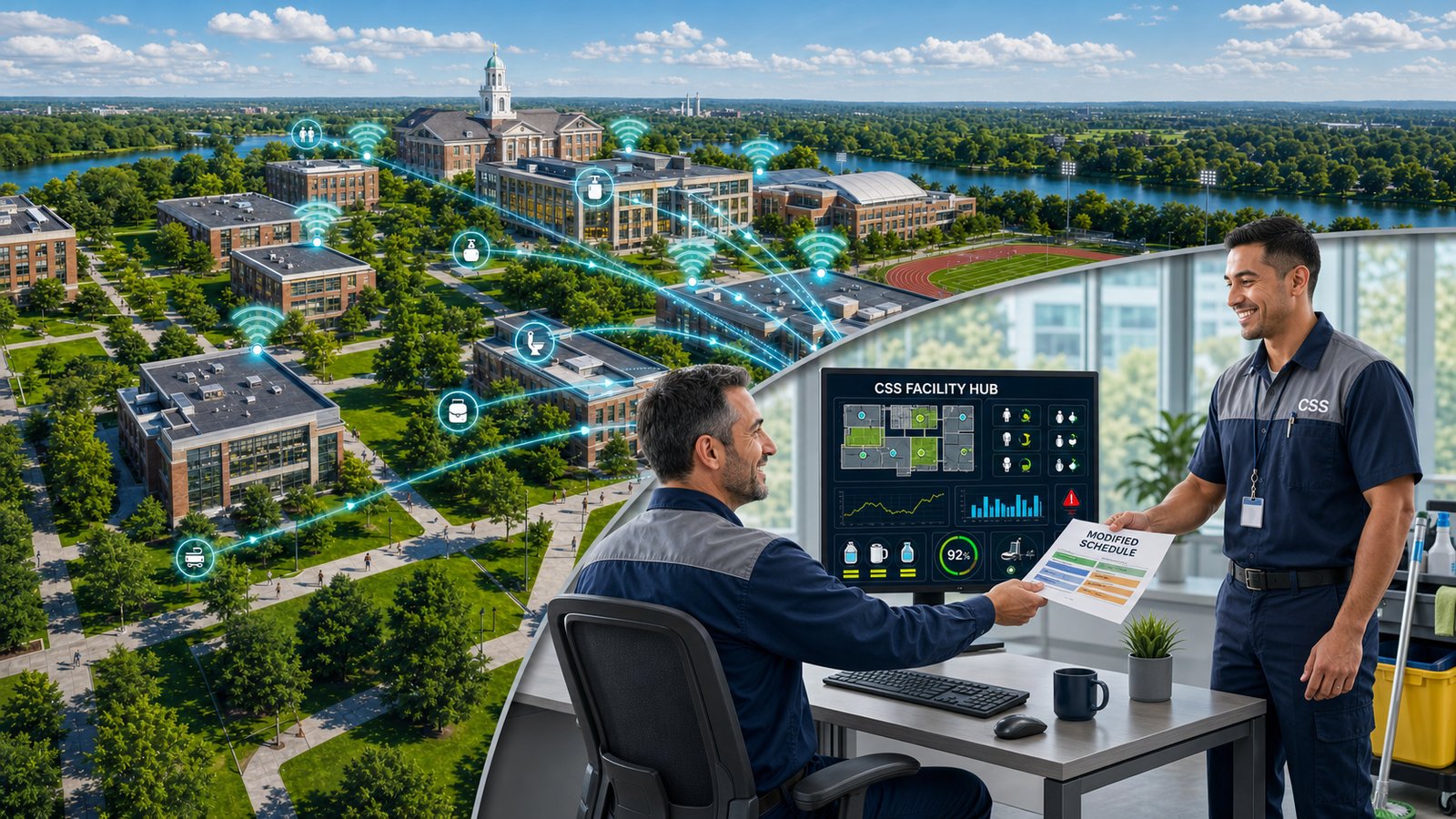
Dynamic scheduling builds each night's custodial work plan from that day's actual building use, instead of a fixed route written months or years ago. It is also called demand-based, occupancy-based or data-driven cleaning. A static schedule cleans by habit; a dynamic schedule cleans by need. Dynamic schedules come from Facility Hub Live with its Dynamic Scheduling add-on and installed sensors, the combination CSS calls a Living Facility.
Why a Fixed Schedule Falls Short on a Campus
On a campus, the activity happens during the day and the cleaning happens at night. A fixed schedule sends the night crew to the same rooms in the same order whether 500 people came through or 50. The lecture hall that ran full all day and the conference room nobody entered get the same attention. No two days on a campus are the same, but the schedule is.
Static Schedule vs. Dynamic Schedule
| Static schedule | Dynamic schedule | |
|---|---|---|
| What sets tonight's work | A route written once | What each space actually saw today |
| An empty wing | Gets its full nightly service | Gets a light pass |
| A 300-person event | Gets the routine pass | Gets more people tonight |
| A callout | A scramble of phone calls | Coverage rebalances to protect the highest-need areas first |
| APPA levels | One level applied everywhere | Levels set by space type and real use |
| Proof | A signed checklist | Scored inspections and a record of where every hour went |
How Dynamic Scheduling Works
1. The building reports its day
Door counters, dispenser sensors and occupancy sensors log which spaces were used and how heavily. They are counters, not cameras, and they never touch the building's network.
2. The data becomes tonight's plan
Facility Hub Live, with its Dynamic Scheduling module, builds tonight's schedule from the day's data. When no occupancy is detected in an area, service is diverted to where the day's data shows the need is greater.
3. Each team member gets tonight's assignments
Which areas are priority, which get a light pass, and why.
4. Machines take the long runs
Autonomous scrubbers and sweepers handle corridors and open floors and document every run, so people spend their hours on restrooms, touchpoints and detail work.
5. Results feed tomorrow
Inspection scores prove the system works, and the next day's data sets the next plan.
Dynamic Scheduling is an add-on module for Facility Hub Live. It is customized for each site, coordinated with the sensor installation, and quoted separately.
Watch: Today's Data, Tonight's Plan
CEO Keith Mowen explains dynamic daily scheduling in Episode 5 of The Living Campus:
Episode 5 of The Living Campus · 7 min
What Changes on Your Campus
- Service follows the students. The spaces that took the day's traffic get the night's attention.
- Problems are handled before the complaint. A restroom that crosses its usage threshold is serviced before it runs out.
- The same budget produces more. No hours are spent on rooms nobody used.
- Service levels are measured. Each space is held to the APPA level its real use calls for, and inspections verify it.
- Your team sees what ours sees. The plan, the scores and the response times are on one screen in Facility Hub Live.
Part of the Living Facility
Dynamic scheduling is the plan inside a Living Facility: sensors are the senses, dynamic scheduling is the plan, autonomous equipment is the muscle, and Facility Hub Live is the brain.
A Core Element of the CSS Program
Dynamic scheduling is a core element of CSS's cleaning program, and of every Living Facility CSS runs.
Frequently Asked Questions
What is dynamic scheduling in custodial services?
Building each night's custodial work plan from that day's usage data instead of a fixed route, so crews go where the traffic was.
Is dynamic scheduling the same as demand-based or occupancy-based cleaning?
Yes, they describe the same idea. Dynamic scheduling goes one step further by also accounting for absences, events and open work orders when the night's plan is built.
Does dynamic scheduling mean fewer custodians?
No. It puts the same team's hours where the building needs them. The technology does not replace your workforce; it multiplies what they can do.
Do the sensors use cameras?
No. They are counters, not cameras: door counters, dispenser levels, and occupancy sensors. They also never touch the building's network.
How does dynamic scheduling work with APPA cleaning levels?
Usage data shows which spaces earn Level 1 or 2 and which can sit at Level 3, so the level is set space by space and verified by inspection. See APPA cleaning standards explained and the APPA staffing calculator.
What software runs dynamic scheduling?
Facility Hub Live, an intelligent CMMS for custodial and facility operations. Dynamic schedules come from Facility Hub Live with its Dynamic Scheduling add-on and installed sensors, the combination CSS calls a Living Facility. Dynamic Scheduling is an add-on module, quoted separately.
How do we find out what it would change on our campus?
Keep Reading
Find out what dynamic scheduling would change on your campus
Request a free campus assessment — it’s free, and there’s no pressure — or watch the series first.
Request a Free Campus Assessment Watch the Living Campus Series